
Why You Shouldn't Buy Lab Diamond Engagement Rings (Or Should You?)
Quick Summary
Lab-grown diamonds face persistent myths that keep couples from considering them, but most of these concerns are based on outdated information. Lab diamonds are real diamonds with identical physical, chemical, and optical properties to mined stones, certified by the same gemological institutes. Lab-grown diamonds are also more sustainable and guaranteed conflict-free, offering peace of mind that your ring reflects your values. As millennials and Gen Z embrace lab diamonds at unprecedented rates, the conversation has shifted from "Why would you?" to "Why wouldn't you?"
If you’re planning to propose, you’ve probably heard some people say "Don't buy a lab diamond engagement ring!" While lab grown diamonds have surged in popularity over the past few years, their rise has sparked plenty of debate. While some embrace this innovative and sustainable option, others cling to misconceptions that simply don't hold up under review.
In this guide, we're reviewing the 5 most common myths that keep couples from considering lab-grown diamonds. Most of them are based on misinformation or assumptions that haven't kept pace with modern technology and shifting values. Lab diamonds are not a compromise or "budget alternative," and they're certainly not fake. In fact, they’re the new normal, with over half of all engagement rings featuring one. Ready to separate fact from fiction? Let's debunk these myths one by one.
Understanding Lab-Grown Diamonds: The Basics
Lab-grown diamonds are real diamonds created in controlled laboratory environments instead of deep beneath the earth's surface. There are two primary methods for creating them: Chemical Vapor Deposition (CVD) and High Pressure High Temperature (HPHT). Here are their respective processes:
-
CVD uses a diamond seed placed in a chamber filled with carbon-rich gases, which bond to the seed and crystallize into a diamond.
-
HPHT mimics the natural conditions that form diamonds underground by applying extreme pressure and heat to carbon.
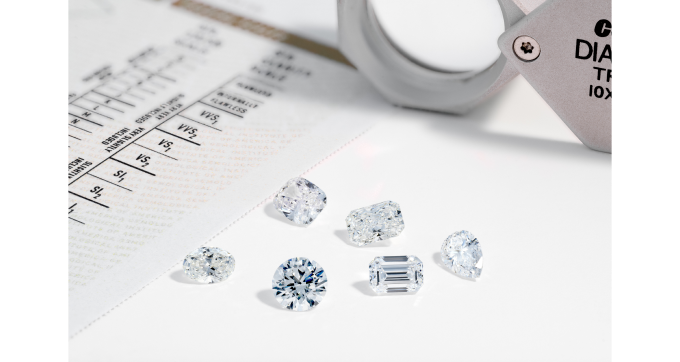
Both methods produce authentic diamonds with the same physical, chemical, and optical properties as mined ones. If that isn't convincing enough, the industry's most respected certification organizations, including the Gemological Institute of America (GIA) and the International Gemological Institute (IGI), certify both lab-grown and mined diamonds using identical grading standards.
Myth #1: "Lab Diamonds Aren't Real Diamonds"
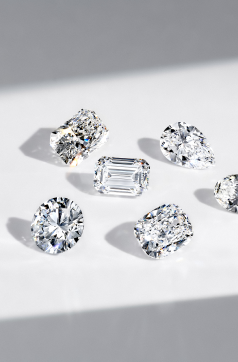
You'll hear people insist that lab diamonds are "synthetic" or "fake." Some will tell you that only diamonds formed over millions of years beneath the earth are "real." But as we’ve indicated, lab diamonds are identical to mined ones in every way that matters. They have the same hardness (10 on the Mohs scale) and sparkle with the same intensity. Even a gemologist can't tell them apart based on appearance alone.
Look at how exquisite a well-cut lab diamond looks when set in a solitaire like The Ashley. The slender band accentuates the center stone, while the clean lines and modest grace take the shimmer and fire to the next level. It's visual proof that "real" has nothing to do with where your diamond came from and everything to do with how it performs.
Myth #2: "Lab Diamonds Will Lose Their Value Over Time"
This myth plays on fear. People worry that lab diamonds are a bad investment that won't hold their value over time. The truth is that most engagement rings, including mined diamonds, are poor investments. Lab-grown diamonds typically have lower resale value than mined diamonds, but since engagement rings are rarely resold and were never strong investments to begin with, their lower upfront cost can make lab diamonds the smarter financial choice.
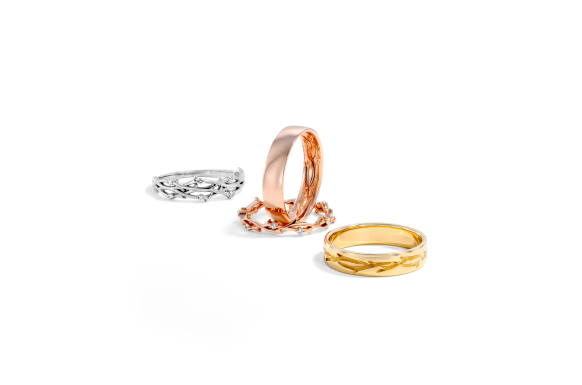
The Pave Twig is an exquisite example. The nature-inspired band, with its delicate curves and textured details, frames the center stone beautifully. With a lab-grown diamond, you can afford a higher-quality center stone with better color and clarity, making this stunning engagement ring even more spectacular.
Myth #3: "Lab Diamonds Aren't Ethical or Eco-Friendly"
This myth gets repeated a lot, and it usually goes something like this: "Sure, lab diamonds avoid the mining issues, but they use tons of energy to create. The carbon footprint is actually worse than mining." The truth is that lab-grown diamonds are far more sustainable than mined ones. They’re also conflict-free: you know exactly where it came from and how it was made. For couples who care about the story behind their ring, that peace of mind is invaluable.
Consider The Pave Nelly. This magnificent pave engagement ring features a sparkling pave band and a hidden halo that delivers an extra level of brilliance. When you choose a lab-grown center stone, you're getting all that radiance with the confidence that your ring reflects your values. It's luxury you can truly feel good about.
Myth #4: "Lab Diamonds Look Different or Inferior"
This myth has some interesting variations. For example, some people believe lab diamonds look "too perfect" and therefore fake. At the other end of the spectrum, others worry that their color or clarity is inferior to that of natural diamonds. The reality is that lab-grown diamonds and mined ones are visually identical. Unless you check the certificate accompanying the stone, you won’t be able to tell them apart.
The Lindsey illustrates this point beautifully. This bestselling side stone engagement ring features marquise and round cut diamonds along the band. When you set a lab diamond amidst all that opulent shimmer, the effect is so luxurious that your friends, family, and even jewelers won't be able to tell the difference just by looking at it.
Myth #5: "People Will Judge Me for Having a Lab Diamond"
What happens when someone asks about your ring and you mention it's lab grown? Will they think you're cheap? That your partner didn't care enough to buy a "real" diamond? Here's what you need to know: lab-grown diamonds are rapidly becoming the preferred choice for modern couples. Millennials and Gen Z are embracing them at unprecedented rates, and even celebrities and influencers are proudly choosing them. The conversation has changed from "Why would you buy lab-grown?" to "Why wouldn't you?"
Lab diamonds are especially opulent in vintage-inspired settings like The Jasmine. With its milgrain accents and gorgeous oval and round detailing along the band, it's a classy piece with true heirloom quality. Set with a lab-grown diamond, this engagement ring carries the same timeless elegance and perennial beauty as any vintage piece that came before it.
Here’s Why You SHOULD Buy a Lab Diamond!
As you can see, lab diamonds are not only ‘real,’ they’re also as breathtaking as natural ones, minus the huge price tag. Since they cost 60-80% less than mined diamonds of identical quality, you can:
-
Upgrade to a larger center stone that makes a more dramatic statement on your hand.
-
Invest in exceptional color and clarity grades: those coveted D, E, or F colors and VVS clarity levels that would be extremely pricey with a mined stone.
-
Choose a more intricate setting with additional diamonds, 18K gold or platinum instead of 14K gold, or custom design elements that bring your vision to life.
By choosing a lab diamond, you can get more of exactly what you want - a more impressive stone, more elaborate setting, and bigger wow factor- without compromise.
Conclusion
Lab-grown diamonds represent the natural evolution of fine jewelry. They're also a beautiful and sustainable choice for couples wanting an engagement ring that reflects their values and their financial intelligence. You're getting the same breathtaking sparkle, the same durability, and the same romantic symbolism, all while making a choice that's better for your wallet, better for the planet, and better for your conscience.
Don't let outdated thinking dictate one of the most important and romantic purchases of your life. Your love story deserves a diamond that's as smart as it is stunning, as ethical as it is elegant. Ready to find your perfect engagement ring? Shop our extensive lab diamond collection now and discover how brilliant your choice can be.


